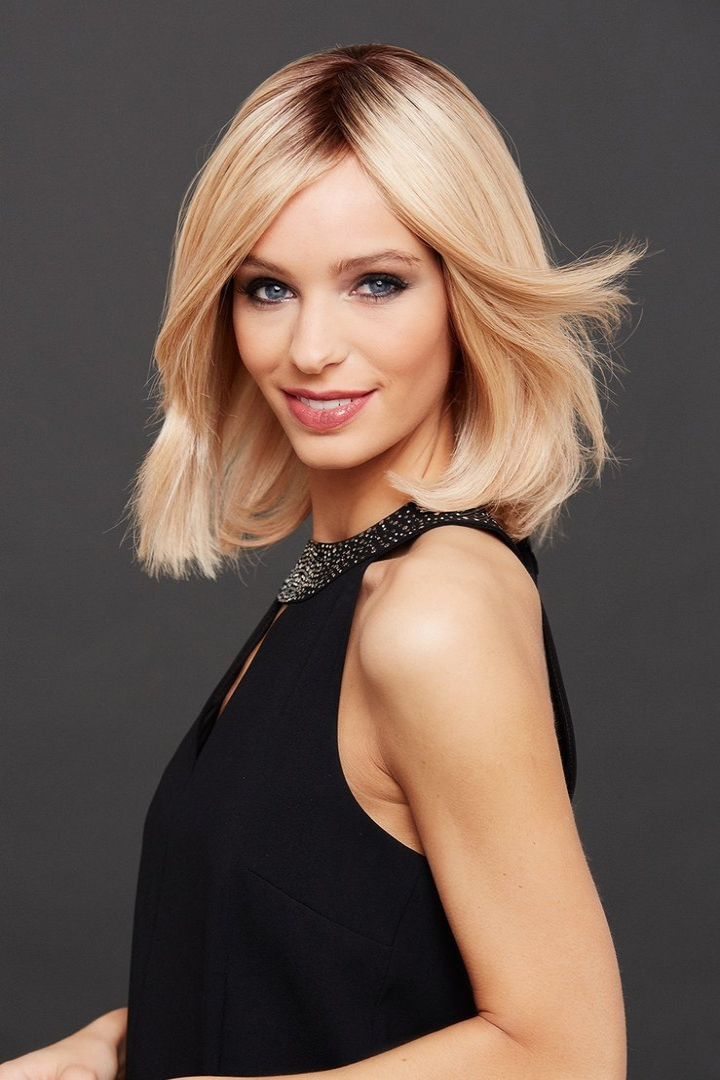
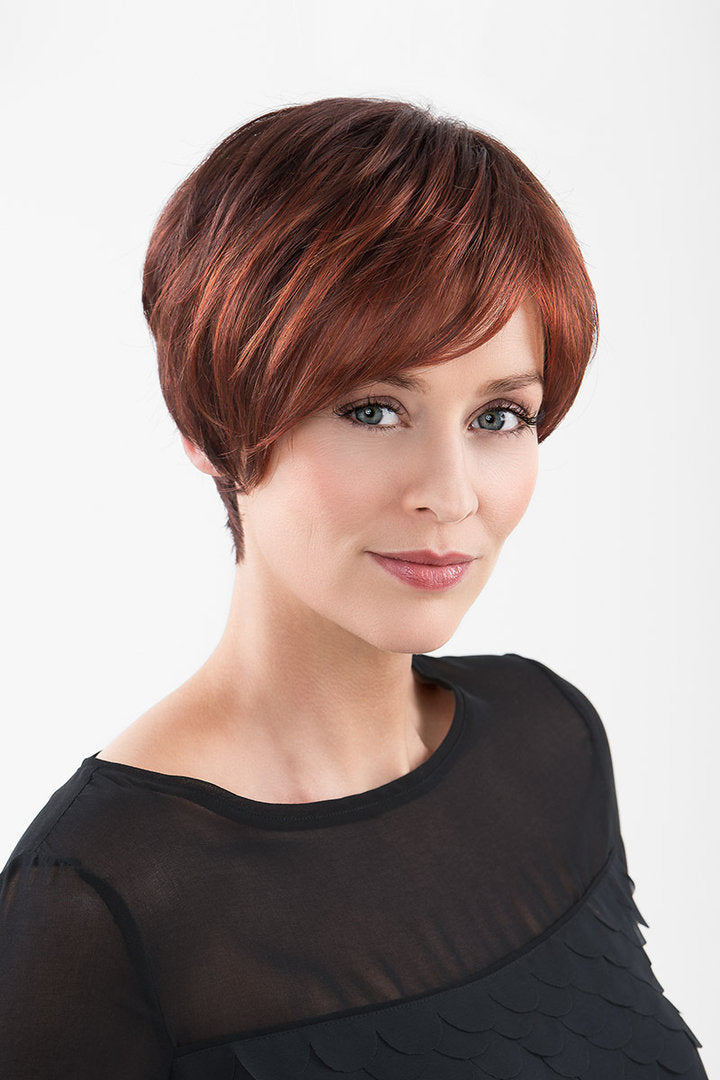
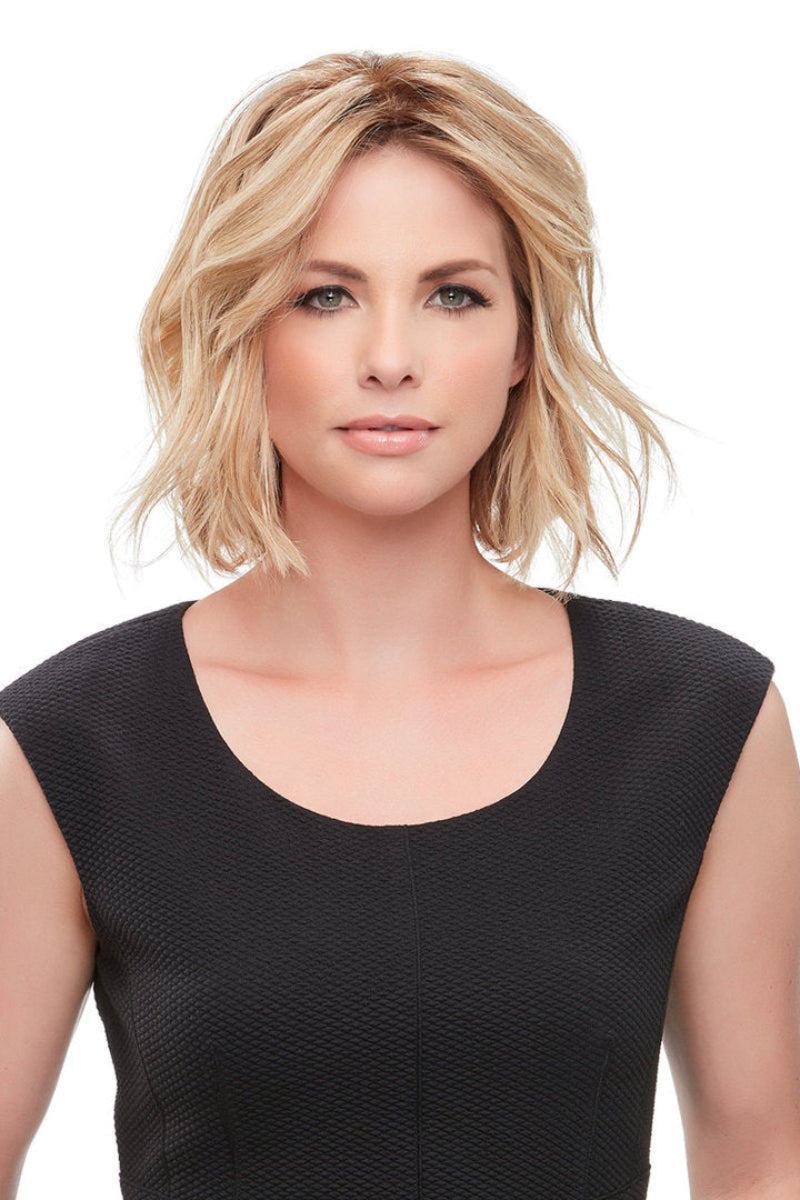



Hormonal hair loss in women can be associated with menopause, childbirth, thyroid conditions or PCOS. Learn about possible causes, suitable treatment options and natural-looking wigs and hairpieces that can help you feel more confident.
Hair loss can occur at many stages of life, from pregnancy and the months after childbirth to perimenopause and menopause. Thinning often develops gradually, affecting not only the appearance of your hair but also how you feel about yourself.
Some forms of hormonally influenced hair loss are temporary and improve after the underlying trigger has been addressed. Others, including female-pattern hair loss, may be persistent and require ongoing treatment. In either case, modern wigs, top pieces and hairpieces offer an immediate, natural-looking option while you investigate the cause and decide which solution feels right for you.
In this article, we explain how hormonal hair loss develops, which life stages and health conditions may be associated with it, and how La Peruca can help you find a high-quality wig or hairpiece that suits your individual needs.
TL;DR – Key points at a glance
- Treating an underlying condition: Managing a thyroid disorder, PCOS or another identified cause may help reduce shedding.
- Topical minoxidil: Minoxidil can help some women with female-pattern hair loss. Available strengths and approved formulations vary between European countries. Ask a doctor or pharmacist for advice, particularly during pregnancy or breastfeeding [1,4].
- Anti-androgen medication: Prescription treatments such as spironolactone may be considered for selected patients. They require medical supervision and are not suitable for everyone.
- Hormone replacement therapy: HRT may be appropriate for broader menopausal symptoms following an individual medical assessment. However, it is not routinely prescribed solely as a treatment for hair loss.
- Correcting confirmed deficiencies: Iron, vitamin D, zinc or other nutrients should generally be supplemented when a deficiency has been identified. High-dose supplements, including biotin, are not a substitute for a medical diagnosis.
What is hormonal hair loss?
Hair growth is influenced by hormones. Each individual hair passes through a cycle consisting of a growth phase, a transition phase and a resting phase. Oestrogen can help keep hair follicles in the active growth phase for longer.
Androgens are hormones that include testosterone and its derivative DHT, or dihydrotestosterone. In genetically susceptible hair follicles, DHT can shorten the growth phase and contribute to gradual follicle miniaturisation. Over time, the hair becomes finer and less dense [1–3].
“Hormonal hair loss” is an umbrella term rather than a single medical diagnosis. Hormonal changes may cause temporary shedding, reveal an underlying predisposition to female-pattern hair loss or occur alongside another condition. A professional medical assessment is therefore important before deciding on treatment.
Androgenetic alopecia, also known as female-pattern hair loss, occurs when hair follicles progressively miniaturise. Genetics play an important role, while hormonal and environmental factors may also contribute. It often becomes more noticeable around menopause, although it can begin earlier in life.
Hormonal hair loss in women: common causes and life stages
Hormonal hair loss can appear at different stages of life. The following are among the most common associations.
Menopause and perimenopause
Hair loss during menopause and perimenopause is common, but it is not caused by declining oestrogen levels alone. Age, genetics, changing hormone levels, stress, health conditions and nutritional deficiencies may all contribute.
Many women notice thinning around the crown and along the parting. The hair may also feel finer, drier or less full than it did previously. For some women, menopause reveals an underlying tendency towards female-pattern hair loss [2,3].
Pregnancy and childbirth
Higher oestrogen levels during pregnancy can keep more hairs in the active growth phase, making the hair appear fuller. After childbirth, hormone levels change rapidly and a larger number of hairs may enter the resting phase at the same time.
This can result in postpartum hair loss, a form of telogen effluvium that often becomes noticeable two to four months after giving birth. For many women, the shedding gradually improves within six to twelve months.
Hair loss during pregnancy itself is less common and should be discussed with a doctor, particularly if it is sudden, severe or accompanied by other symptoms
Thyroid conditions
Both an overactive and an underactive thyroid can disrupt the hair-growth cycle. Thyroid hair loss often appears as diffuse thinning across the scalp rather than as one clearly defined area.
Hair growth may improve after thyroid function has been brought under control, although visible recovery can take several months. Persistent shedding should be assessed separately rather than automatically attributed to the thyroid.
PCOS (Polycystic Ovary Syndrome)
Polycystic ovary syndrome, or PCOS, is a hormonal and metabolic condition. Some people with PCOS have elevated androgen levels, which may contribute to PCOS hair loss around the crown and parting. Increased facial or body hair can occur at the same time.
Treatment depends on the individual symptoms, hormone profile and whether pregnancy is being planned. A doctor or dermatologist can recommend suitable options.
Other possible triggers
Stopping hormonal contraception, significant weight changes, chronic stress and deficiencies in nutrients such as iron or vitamin D can trigger or intensify shedding.
These factors do not always represent hormonal hair loss in the strict medical sense. This is another reason why a professional diagnosis is important.
Addressing hormonal hair loss: medical options
The first step is to establish what is causing the hair loss. A doctor or dermatologist may examine your scalp, review your medical history and arrange blood tests where appropriate. Depending on your symptoms, these may include thyroid function, ferritin or iron status, vitamin D and selected hormone tests.
Possible approaches include:
- Treating an underlying condition: Managing a thyroid disorder, PCOS or another identified cause may help reduce shedding.
- Topical minoxidil: Minoxidil can help some women with female-pattern hair loss. Available strengths and approved formulations vary between European countries. Ask a doctor or pharmacist for advice, particularly during pregnancy or breastfeeding [1,4].
- Anti-androgen medication: Prescription treatments such as spironolactone may be considered for selected patients. They require medical supervision and are not suitable for everyone.
- Hormone replacement therapy: HRT may be appropriate for broader menopausal symptoms following an individual medical assessment. However, it is not routinely prescribed solely as a treatment for hair loss.
- Correcting confirmed deficiencies: Iron, vitamin D, zinc or other nutrients should generally be supplemented when a deficiency has been identified. High-dose supplements, including biotin, are not a substitute for a medical diagnosis.
Important: Every therapy takes time. First visible results appear after at least three to six months. Hormone-related hair loss is not a process that can be reversed overnight.
Hair-loss treatments require patience. Depending on the cause and chosen treatment, it may take at least three to six months before changes become visible. Results vary, and not every form of hormonally influenced hair loss is fully reversible.
Seek prompt medical advice if your hair loss is sudden or patchy, if your scalp is inflamed or painful, or if the shedding is accompanied by other new symptoms.
Wigs and hairpieces: an immediate option for hormonal hair loss
Medical treatment takes time, and some forms of hair loss persist despite treatment. A modern wig or hairpiece can provide immediate coverage, restore volume and help you feel more like yourself.
Today’s wigs and hairpieces use sophisticated construction techniques to create a natural appearance and comfortable fit. La Peruca offers models from renowned brands such as Jon Renau, known for natural-looking colours, lightweight designs and comfortable cap constructions.
The following features can make a particularly noticeable difference:
- Monofilament top: A fine, skin-toned material creates the appearance of hair growing directly from the scalp.
- Lace front: A sheer front edge helps create a natural-looking hairline.
- Hand-tied sections: Individual hairs are tied into the cap to allow softer, more natural movement.
For thinning around the crown or parting, top pieces, also known as hair toppers, can be especially helpful. They blend with your existing hair and provide coverage and volume exactly where it is needed.
Our women’s wig collection includes a wide choice of styles, from easy-care short cuts to long, flowing hair.
For maximum styling flexibility, explore our human hair wigs. They can be washed, blow-dried and styled much like your own hair, although the manufacturer’s care instructions should always be followed.
If you prefer a lightweight, easy-care alternative, our synthetic wigs retain their shape after washing and can look remarkably natural.
Hormonal hair loss and health insurance: prescription wigs in Germany
The following information applies exclusively to people covered by statutory health insurance in Germany. La Peruca cannot process prescription-wig funding through statutory healthcare systems in other countries.
If significant hair loss has been medically diagnosed, a doctor in Germany may issue a medical prescription for a wig. Under the German statutory health insurance system, the wig can then be treated as a medical aid—a formal German healthcare category for approved products intended to support people with a medical condition.
La Peruca can handle the application and direct billing with German statutory health insurance, normally without requiring an upfront payment or extensive paperwork from you. The amount covered and any co-payment depend on the insurer and the individual case.
Private health insurance follows the terms of the individual policy. Customers with private insurance and customers living outside Germany should contact their own insurer before purchasing to ask whether reimbursement may be available.
Further details are available on our prescription wig page. The service described on this page applies only within the German healthcare system.
C
Wig care: keeping your wig or hairpiece beautiful
High-quality wigs and hairpieces deserve appropriate care. Use products developed specifically for human hair wigs or synthetic wigs, and never rub, twist or wring the hair while washing it.
Store your wig or hairpiece on a suitable wig stand so that it retains its shape. How often it should be cleaned depends on how frequently it is worn, the material, the use of styling products and the manufacturer’s instructions.
Synthetic hair should generally be kept away from heat unless the product is specifically labelled as heat-resistant. Human hair wigs offer greater styling flexibility but still require heat protection and gentle handling.
You can find detailed instructions for both materials in our wig care tips.
Taking the next step: advice from La Peruca
You do not have to navigate hormonal hair loss alone. The La Peruca team offers personal and discreet guidance to help you find a wig, top piece or hairpiece that feels comfortable and looks natural.
For advice in English, please contact us by email. A written enquiry allows our team to consider your questions carefully and provide a clear, detailed response:
Email: info@laperuca.de
Service hours: Monday to Friday, 10:00–18:00 Central European time
This article provides general information and does not replace an individual medical diagnosis or treatment recommendation.
References
[1] Blumeyer A. et al. (2011): Evidence-based (S3) guideline for the treatment of androgenetic alopecia in women and in men. Journal of the German Society of Dermatology. Accessed 12 August 2026.
[2] Ramos P. M., Miot H. A. (2015): Female Pattern Hair Loss: a clinical and pathophysiological review. Anais Brasileiros de Dermatologia. Accessed 12 August 2026.
[3] Grymowicz M. et al. (2020): Hormonal Effects on Hair Follicles. International Journal of Molecular Sciences. Accessed 12 August 2026.
[4] Lucky A. W. et al. (2004): A randomised, placebo-controlled trial of 5% and 2% topical minoxidil solutions in female-pattern hair loss. Journal of the American Academy of Dermatology. Accessed 12 August 2026.