



Hashimoto's thyroiditis is one of the most common autoimmune diseases of the thyroid – and hair loss is among its most distressing accompanying symptoms. Diffuse thinning hits many sufferers unexpectedly and noticeably impacts their well-being. The good news is: you are not alone, and there are effective ways to quickly regain your quality of life.
While medical treatments take time, modern alternative hair offers an immediate way to start your everyday life with confidence again. In this guide, you will learn why Hashimoto-related hair loss occurs, what symptoms accompany it, and which solutions – both medical and practical – truly help.
TL;DR – The most important points at a glance
- Hashimoto's thyroiditis slows down the metabolism and prematurely pushes hair follicles into the resting phase.
- In addition to thyroid hormones, iron deficiency, vitamin D, and selenium play a decisive role.
- Only when TSH levels and ferritin are stable within the normal range can hair grow back – this usually takes 3–12 months.
- With a medical diagnosis, health insurance companies often cover the costs for a prescription wig.
- High-quality alternative hair bridges the waiting period and immediately restores self-confidence.
Hashimoto's and hair loss: How are they related?
Hashimoto's thyroiditis is an autoimmune disease in which the body's own immune system attacks the thyroid gland. This gradually leads to hypothyroidism, which slows down the entire metabolism. This has direct consequences for the hair follicles: in a slowed metabolism, they are prematurely pushed into the resting phase, causing significantly more hair to fall out than grows back.
A characteristic of Hashimoto-related hair loss is its diffuse pattern: the hair thins evenly across the entire head, especially at the crown. Unlike hereditary hair loss, there are no typical receding hairlines. Many sufferers notice the hair loss before the thyroid disease is even diagnosed – because Hashimoto's symptoms often develop insidiously over years [1].
Accompanying symptoms: What worsens Hashimoto's hair loss
Hair loss in Hashimoto's patients rarely occurs in isolation. The following factors often further exacerbate it:
Iron deficiency
In Hashimoto's patients, iron absorption in the intestine is often impaired. Low ferritin levels – the iron storage value – significantly worsen hair loss, even when thyroid levels are already being treated. Without sufficient iron, the body lacks a crucial building block for healthy hair growth [2]. Therefore, iron deficiency and hair loss frequently form a self-reinforcing cycle in Hashimoto's.
Dry, itchy scalp
Hypothyroidism causes dry skin all over the body – which is particularly uncomfortable on the scalp. Itching and flaking are frequent companions that additionally burden daily life.
Alopecia areata as a comorbidity
Having one autoimmune disease increases the risk of others. Alopecia areata (patchy hair loss) can occur in addition to diffuse Hashimoto's hair loss and manifests as sharply defined bald patches. This combination significantly increases the emotional burden.
Stopping Hashimoto's hair loss: Medical treatment
The most important measure is: optimal medical management. An endocrinologist or a specialized primary care physician will adjust the thyroid hormones – usually L-thyroxine – individually. Only when the TSH level is stable in the optimal range does the body have the foundation for healthy hair growth.
In parallel, nutritional deficiencies must be addressed. In addition to iron, vitamin D, zinc, and selenium play a crucial role. A comprehensive blood test will show where deficits exist. Replenishing these stores not only supports the hair but often improves overall well-being.
Even with perfect blood levels, the hair cycle takes time: new hair requires several months before it visibly grows back. This waiting period can be grueling – especially when the hair loss remains visible every day. This is precisely where a complementary solution comes into play.
Alternative hair for Hashimoto's: Feeling good again, immediately
While the body heals, your self-confidence doesn't have to wait. Modern alternative hair offers an immediate way to make Hashimoto-related hair loss invisible. Today's solutions bear no resemblance to the stiff models of past decades.
Benefits of high-quality alternative hair:
- Natural look: Barely distinguishable from your own hair
- Comfort: Breathable materials, particularly suitable for sensitive scalps
- Secure fit: Reliable attachment for everyday use
- Individual customization: Matching your hair color and style
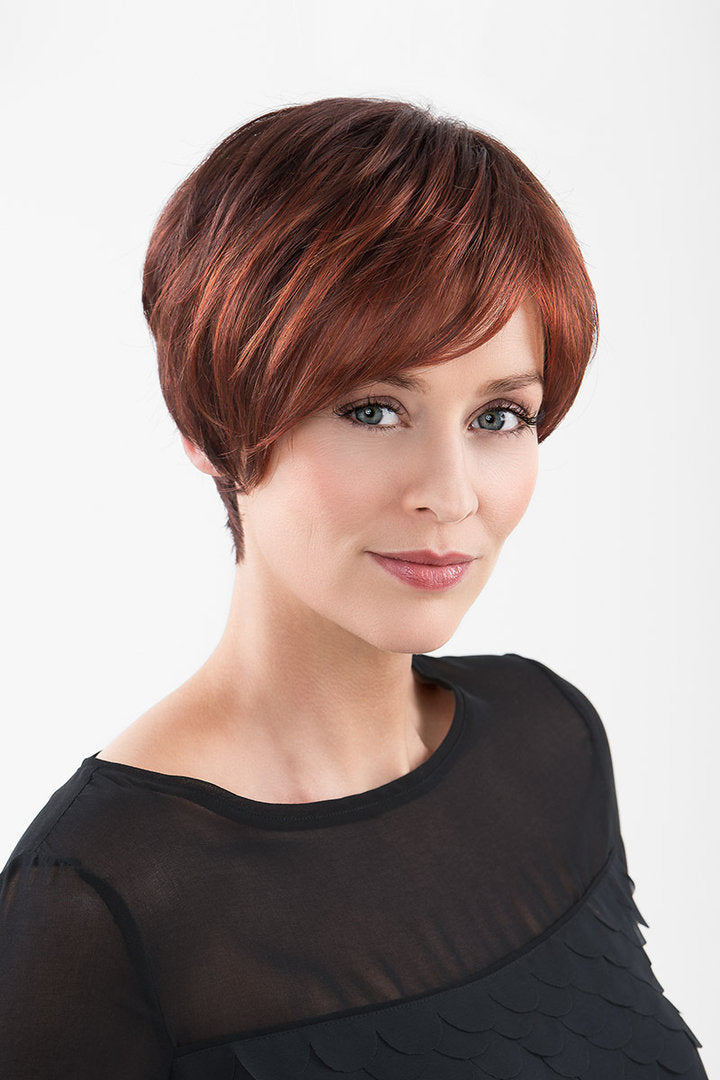
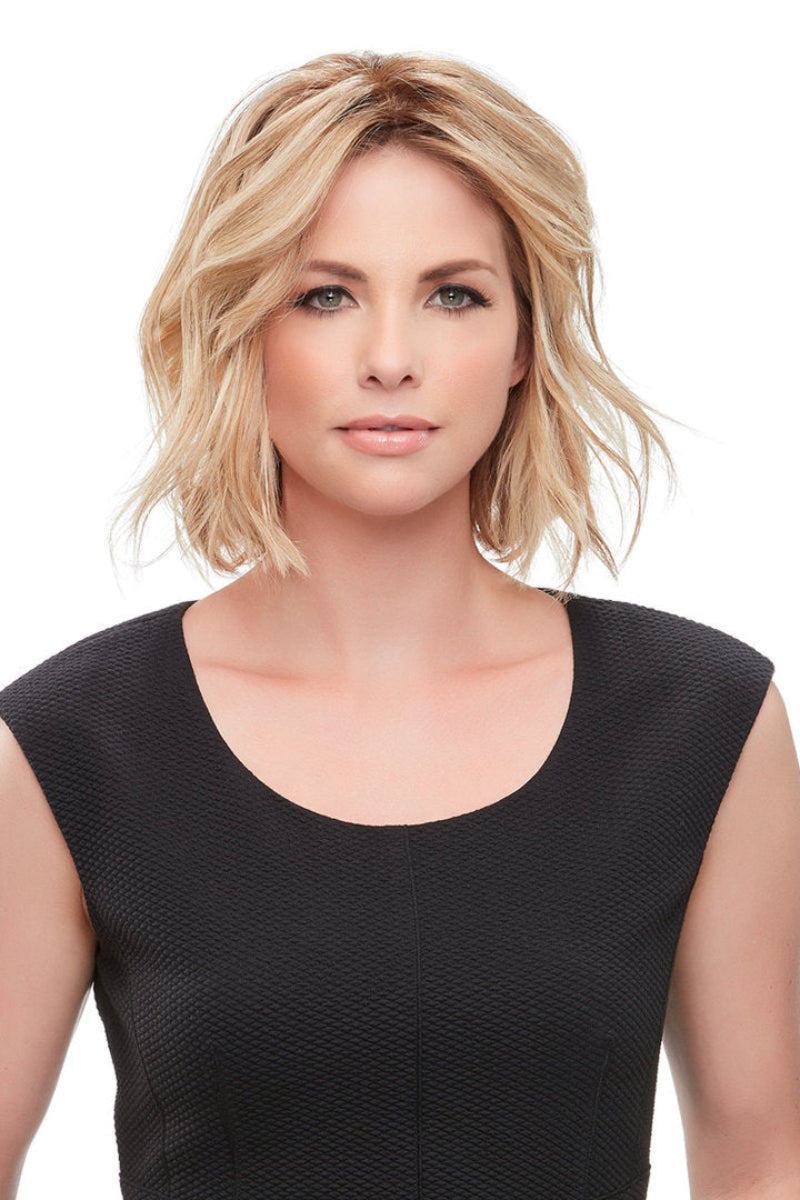
For diffuse hair loss at the crown – the typical pattern in Hashimoto's – hair toppers are the ideal choice. They are invisibly integrated into existing hair and immediately create fullness and volume.
In cases of advanced hair loss, high-quality women's wigs offer full coverage with a natural look. You are free to choose the material: human hair wigs offer maximum naturalness and styling freedom. Synthetic wigs are impressive due to their ease of care and shape retention.
For the long-term durability of your wig, you can find helpful instructions for proper care in our care tips.
Wig by prescription: Reimbursement for Hashimoto's
Hair loss due to autoimmune diseases like Hashimoto's thyroiditis is medically recognized. Your dermatologist or primary care physician can issue a prescription for medical hair replacement. In many cases, statutory health insurance companies cover a significant portion of the costs – sometimes even the entire supply (§33 SGB V) [3].
At La Peruca, we take care of the bureaucratic effort for you. Once you have received the prescription from your doctor, we handle the entire process with your health insurance company. You can focus entirely on finding the right alternative hair solution.
We at La Peruca understand what you are going through. Our team will advise you with empathy and expertise – by phone at 030/89409449 or via email. Hashimoto-related hair loss is a temporary challenge, not a permanent limitation. Together, we will find the solution that suits you.
We are here for you
We at La Peruca understand what you are going through. Our team provides empathetic and expert advice. Hashimoto-related hair loss is a temporary challenge, not a permanent limitation. Together, we will find the solution that suits you. You can find a complete overview of hair loss – types and causes in our main guide.
- Tel.: 030/89409449
- E-Mail: info@laperuca.de
Sources
- [1] Stagi S. et al. (2014): Hashimoto's thyroiditis and alopecia: a common autoimmune ground? Retrieved April 2026: Link
- [2] Rushton DH (2002): Nutritional factors and hair loss. Clin Exp Dermatol. Retrieved April 2026: Link
- [3] §33 SGB V – Register of aids, product group 25 (wigs). Retrieved April 2026: Link